Every now and then, a session comes along that reminds me exactly why I dedicated my life to animal behaviour and helping the animals of Cumbria. Today was one of those days, and the star of the show was a tenacious Patterdale Terrier named Alfie.
When Alfie’s guardians first reached out to me a few months ago, walks were a source of high anxiety. Because he had missed out on critical socialization windows as a young puppy, the world felt like a chaotic, unpredictable place. When he saw another dog, his default response was intense reactivity—barking, lunging, and a total emotional overload.
Today, Alfie achieved a milestone that, months ago, felt a lifetime away: he completed a full walk alongside one of my personal dogs, showing zero reactivity and engaging in beautiful, polite interactions.
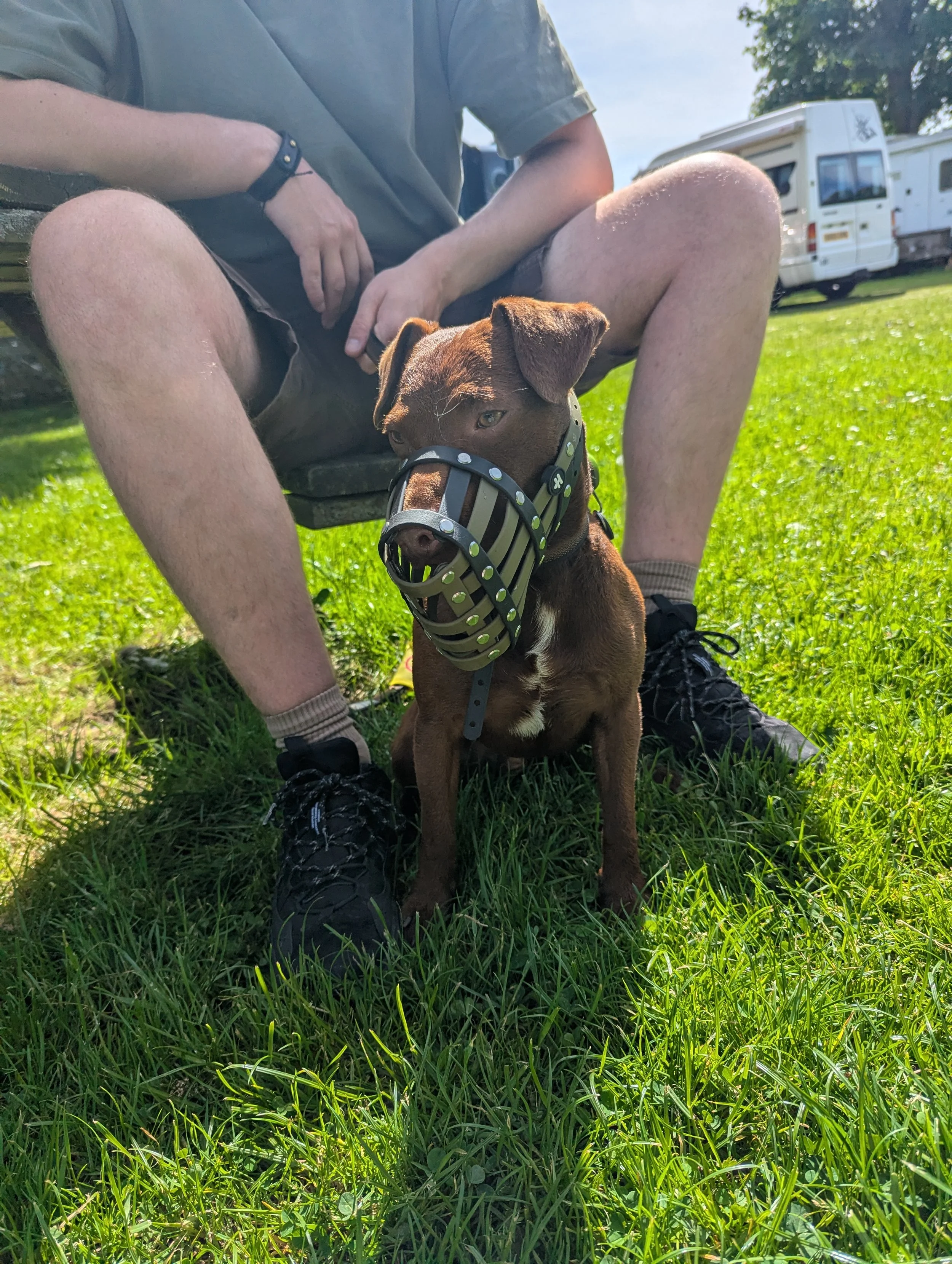
Alfie - 3yr Old Patterdale Terrier

How we did it
When dealing with a reactive dog, it is incredibly tempting to look for a shortcut. But suppressing a behaviour with force or fear doesn't heal the underlying emotion—it just bottles it up. Because Alfie missed early socialisation, his reactivity wasn't bad behaviour; it was a manifestation of fear and a lack of safety.
To help him, we had to change how he felt about the world, not just how he acted.
Step 1: Changing the Narrative Around Muzzles
One of our first priorities was muzzle training. To the general public, a muzzle is often viewed as a sign of a dangerous dog. To a behaviour consultant, a muzzle is a tool of ultimate freedom and safety.
Alfie’s people have spent weeks building a positive association to a muzzle, he still has his moment when he doesn’t want it on but he’s getting there . Through slow, force-free conditioning, the muzzle became a predictor of wonderful things (like high-value treats and praise). It allowed his guardians to breathe a sigh of relief, knowing everyone was safe, which in turn lowered the tension on the leash.
Step 2: Working Below Threshold
We didn't throw Alfie into the deep end. We used systematic desensitisation, carefully managing his environment so he could observe other dogs from a distance where he still felt safe, we started this with one of my personal dogs that I know would not react to him, helping to build a solid foundation. By keeping him below threshold, we allowed his brain to process new, positive experiences without flipping into a panic response.
Step 3: Introducing a Balanced Helper Dog
Once Alfie’s foundation was rock-solid, it was time to introduce a different helper dog. This is when I brought in my hyper-social spaniel, he’s not intimidating, wants to be friends with everyone and wouldn’t react if Alfie took a dislike to him. This allowed us to choreograph a parallel walk, gradually decreasing the distance at Alfie's pace.
Seeing him transition from a dog who couldn't cope with the sight of another canine to a dog who could walk side-by-side, investigate scents, and offer polite, relaxed social cues was nothing short of magical.
Every Dog Carries a Story
Alfie’s success is a testament to the power of science-based, fear-free training and the incredible dedication of his guardians. Change doesn't happen overnight, but when you commit to listening to what a dog is trying to tell you, the results are profound.
Does your dog struggle with big feelings on walks and the Dales or Lakes? You don't have to navigate the stress of reactivity alone. Whether your dog is a rescue carrying a heavy history or missed out on early socialisation, we are here to help you understand the why behind their behaviour and build a language of trust.