How to Prepare for a New Rescue Dog’s First Weeks
Adopting a rescue dog is an incredibly rewarding experience. When you first bring your new pup home, it’s completely natural to want to shower them with affection, introduce them to friends, and take them on grand adventures.
However, from a behavioural perspective, your new dog has just experienced a massive life upheaval. Even the most loving kennel or foster environment is stressful, and stepping into a brand-new home with new people, rules, and smells can be overwhelming.
To help your new rescue dog transition smoothly and prevent common behavioural issues, we recommend following the 3-3-3 Rule and setting up a decompression routine. Here is how you can prepare your home and your mindset for your new rescue dog.

3 Days, 3 Weeks, 3 Months, the rule of the 3 for bringing any new pet home.
The 3-3-3 Rule of Decompression
Understanding your dog's emotional timeline is key to preventing frustration.
The First 3 Days
The first few days in a new home is when your new rescue dog is likely to feel the most stressed. They might shut down completely, hide or refuse to eat. This is completely normal, they are scared and are trying to establish if they are safe or not.
The First 3 Weeks
As their time with you progresses and they realise this new arrangement is permanent they will start to settle in, this is often when their personalities really start to show and when undesirable behaviours might surface as they test the rules and boundaries of their new home.
The First 3 Months
After a few months with you your pup should be feeling more secure and have an understanding of the household routine. At the same time they should have started to build the bond with you and the other members of the household.
How to Set Up a Rescue Dog Decompression Space or Safe Zone

Before you bring your new dog home from the rescue make sure to set up a safe space for them. This should be in a quiet area just for them away from the main traffic of the home. This could be a spare room, or a quiet corner with a cosy bed or open crate in. You don’t want your new dog to have access to the whole house straight away as this can be overwhelming for them.
Why it works: Your new dog needs a place where they can escape and sleep without being bothered. Instruct family members (especially children) that when the dog is in their Safe Zone, they must be left completely alone.
Managing Your Rescue Dog's First Week (Avoid Trigger Stacking)
It’s tempting to invite friends or family over (we know they want to meet the new addition), or head straight to the pet store.
Don't do it just yet!
Let your dog settle in first. Keep the environment quiet and stress free.
Postpone visitors, vet visits (unless urgent), and trips to crowded parks for at least the first week. Focus entirely on predictable routines and building your own bond with them before introducing more people and places.
Why it works: Minimising extra stimuli prevents "trigger stacking"—a phenomenon where multiple minor stressors build up until a dog snaps, panics, or displays aggression.
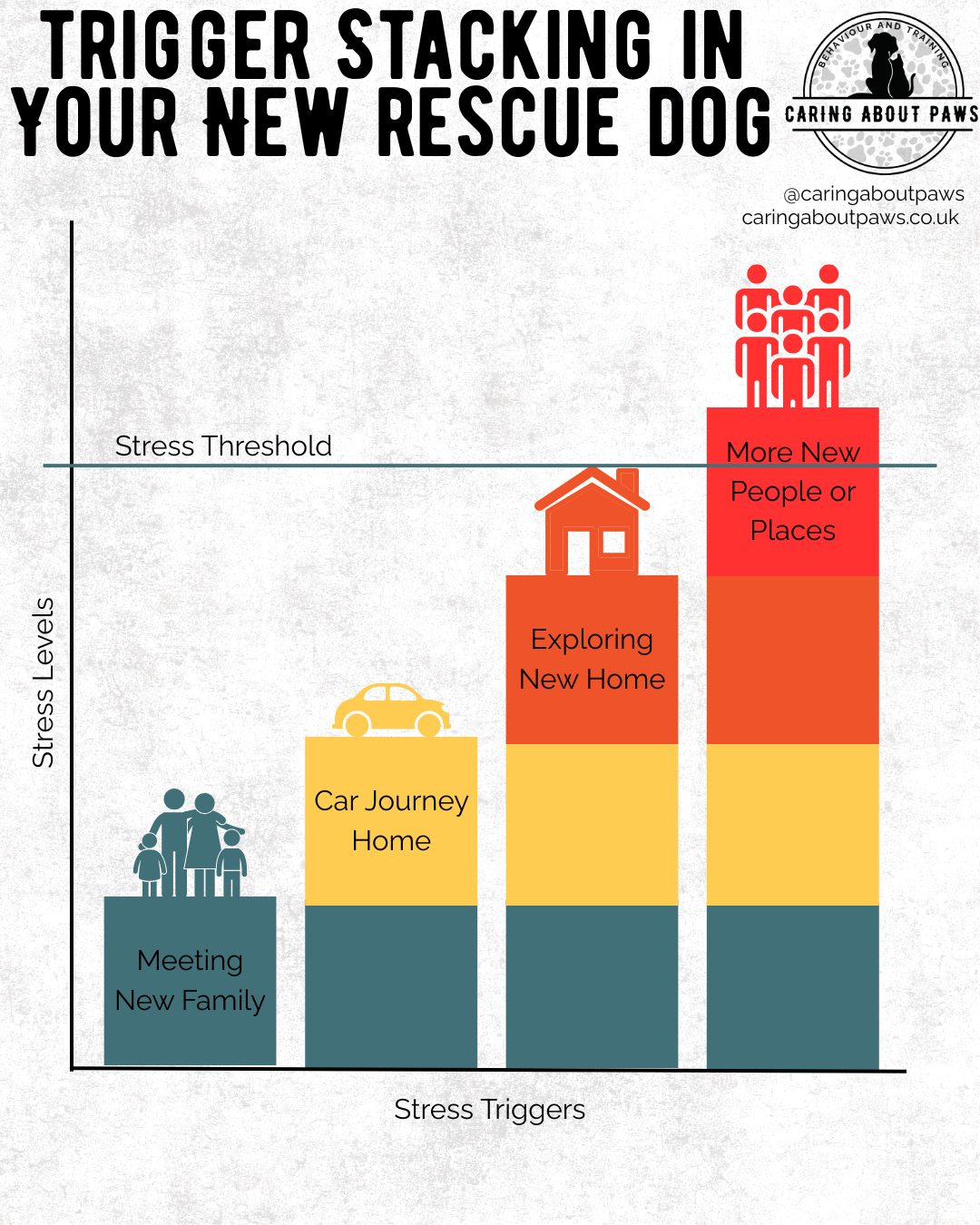
Everything can be a potential stressor to a dog in a new home, its best to err on the side of caution until they are settled into their new home.
Establish Predictable Routines for Your New Pet From Day One
Predictability is the ultimate antidote to anxiety.
Set up a consistent schedule for feeding, potty breaks, and bedtime from day one. Walk the exact same short route around your neighbourhood for the first couple of weeks rather than exploring new places.
Why it works: When a rescue dog can accurately predict what happens next in their environment, their baseline anxiety drops significantly, allowing their true, confident personality to shine. Walking the same route around the local area also helps them to establish where home is, helping them feel more secure in their new environment.
Need Help Navigating Your Rescue Dog's Transition?
Bringing home a rescue dog is a journey, and sometimes unexpected behavioural challenges arise—such as separation anxiety, resource guarding, or leash reactivity. You don't have to navigate these hurdles alone.
I specialise in rescue dog behaviour consulting and decompression across Cumbria, the Lakes and the Yorkshire Dales. Book an initial consultation today or my rescue bundle (a consultation and 2 follow up sessions), and let’s work together to give your new companion the best possible start to their new life.
-
According to the 3-3-3 rule, it typically takes 3 days for a rescue dog to stop feeling overwhelmed, 3 weeks to start showing their personality, and 3 months to feel fully secure in their new home. However each dog is an individual so these times can vary.
Need some help with your rescue dog? Book a consultation with me today.
-
You should have a safe place set up for them that limits their access to the rest of the house. This could be a spare room, a crate or a play pen. Make sure it’s nice and cosy and has somewhere they can hide if they want.