A Stress-Free Guide to Bringing Your New Rescue Cat Home
Bringing a new rescue cat into your home is an exciting milestone! But if you open the carrier door right in the middle of your living room, your new feline friend will likely bolt behind the couch or under the fridge and stay there for days.
Cats are highly territorial creatures who rely heavily on familiar scents and spaces to feel secure. Moving to a new home completely strips away their sense of safety.
The 3-3-3 Rule of Decompression
Understanding your cat's emotional timeline is key to preventing frustration.
The First 3 Days
The first few days in a new home is when your new rescue cat is likely to feel the most stressed. They might shut down completely, hide or refuse to eat. This is completely normal, they are scared and are trying to establish if they are safe or not.
The First 3 Weeks
As their time with you progresses and they realise this new arrangement is permanent they will start to settle in, this is often when their personalities really start to show and when undesirable behaviours might surface as they test the rules and boundaries of their new home.
The First 3 Months
After a few months with you your cat should be feeling more secure and have an understanding of the household routine. At the same time they should have started to build the bond with you and the other members of the household.

3 Days, 3 Weeks, 3 Months, the rule of the 3 for bringing any new pet home.
Setting Up a Cat Sanctuary Room for Success
Never give a new cat immediate, free reign of the entire house. The sheer amount of open space can cause a profound panic response.
Set up a small, quiet room (like a spare bedroom or little used room in the house) as their dedicated Sanctuary Room. Equip it with their litter box, food, water, a scratching post, and a cozy bed. Ensure there is plenty of space between each item, cats don’t like their different activities to be near one another. Keep the door closed to the rest of the house.
Why it works: A smaller space allows the cat to quickly map out the boundaries, process the new household sounds safely, and claim the space with their own scent, which makes them feel secure.
Essential Supplies: How to Settle a Rescue Cat
How you arrange the Sanctuary Room matters immensely to a cat's psychology.
Keep the food and water bowls completely separate from the litter box (cats hate eating near their toilet!). Provide plenty of safe hiding options, like a cardboard box with a blanket inside, or an igloo bed. Cats also love to be up high, so include cat trees or shelving (bonus if you can put a hiding place up high!)
Why it works: Forcing a cat to choose between hiding or eating creates internal conflict. Giving them a safe place to hide while having easy access to resources reduces their stress baseline.

Cat trees are a great way to provide your new rescue cat with not only height but also somewhere to hide and feel safe.
Master the Art of Passive Bonding

When a cat is hiding, the worst thing you can do is reach in, pull them out, or force them to cuddle.
Sit quietly on the floor of the Sanctuary Room. Read a book, scroll on your phone, or work on your laptop. Talk softly, but ignore the cat completely. Bring in ultra-high-value liquid treats (like Licki Sticks) and gently squeeze a little onto a small plate near their hiding spot.
Why it works: This teaches the cat that your presence is non-threatening, predictable, and associated with delicious food, without putting any pressure on them to perform or interact.
Swap Scents Before Introducing the House
Before letting your cat out of their Sanctuary Room, you need to introduce them to the rest of the home's inhabitants via scent.
Gently rub a soft cloth or a clean sock around your cat’s cheeks (where their happy pheromones are), and leave it out in the living room for other family members or resident pets to sniff. Take a blanket from the living room and place it in the cat's Sanctuary Room.
Why it works: Scent communication is a cat's primary language. "Scent swapping" allows them to get to know their new family without the visual stress of a face-to-face meeting.

Your cat knows what they can cope with, they will adjust at their own pace.
Let Them Set the Timeline
Every rescue cat operates on their own internal clock. Some bold cats may scratch at the door to get out within 24 hours; timid cats might take several weeks before they venture out.
Only open the Sanctuary Room door when your cat is relaxed, eating reliably, and actively seeking your attention at the door. When you do open it, let them explore the rest of the house on their terms, keeping the Sanctuary Room open so they can run back to their safe base if they get spooked (bonus if during this time any other pets in the home don’t have access to the Sanctuary Room).
Managing Your Rescue Cat’s First Week (Avoid Trigger Stacking)
It’s tempting to invite friends or family over (we know they want to meet the new addition).
Don't do it just yet!
Let your cat settle in first. Keep the environment quiet and stress free.
Postpone visitors and vet visits (unless urgent). Focus entirely on predictable routines and building your own bond with them before introducing more people and places.
Why it works: Minimising extra stimuli prevents "trigger stacking"—a phenomenon where multiple minor stressors build up until a cat panics, or displays aggression.
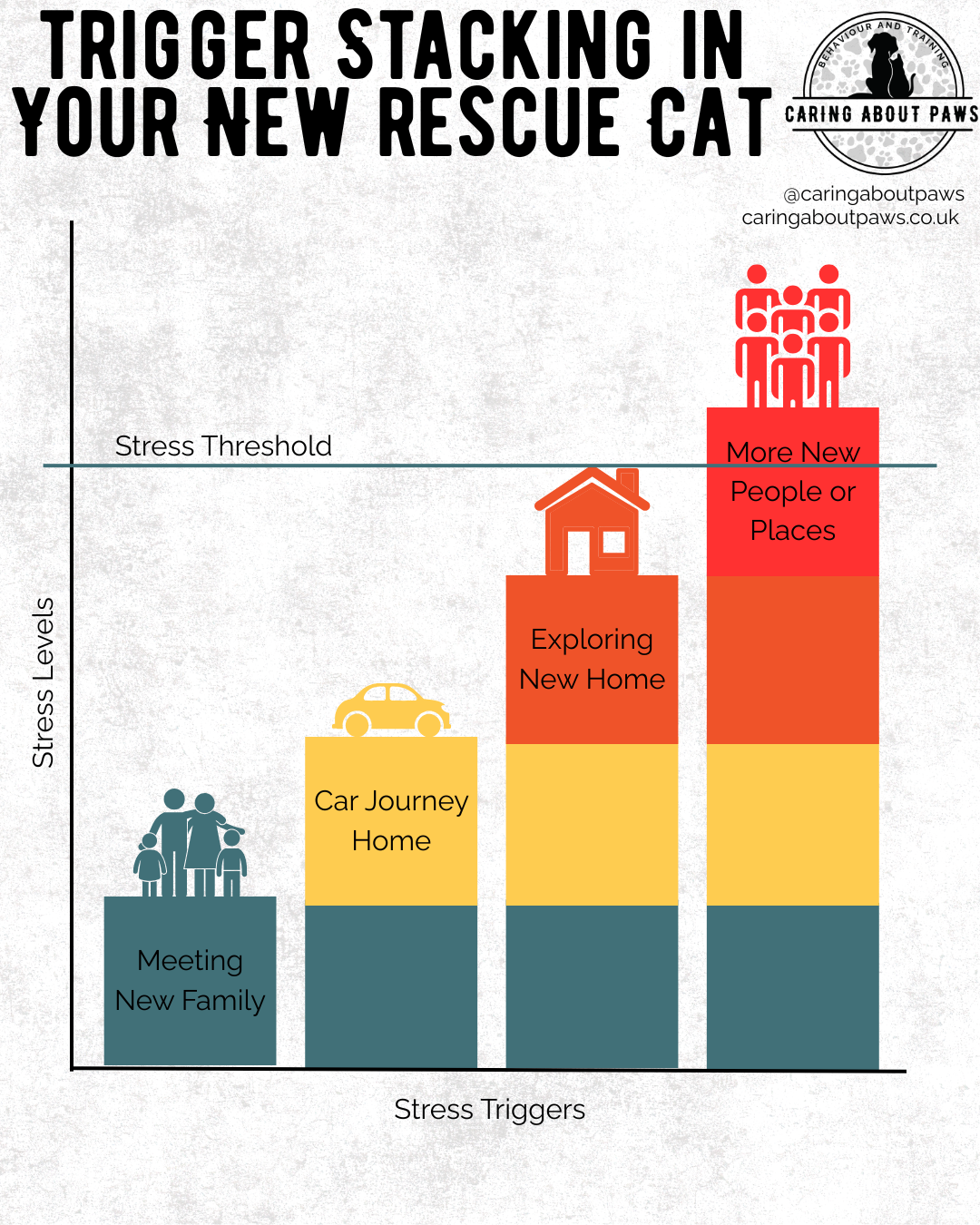
Everything can be a potential stressor to a cat in a new home, its best to err on the side of caution until they are settled into their new home.
Is Your New Rescue Cat Struggling to Adjust?
If your new cat has been hiding for weeks, refuses to eat, shows aggression, or is having litter box issues, they are experiencing profound stress. These early weeks are crucial for setting up long-term behaviour patterns.
I specialise in feline behaviour modification and environmental consulting across Cumbria, the Lakes and the Yorkshire Dales. If you're feeling stuck and aren't sure what your next step should be, book an initial consultation or Rescue Package today. Let’s work together to build your new cat's confidence and create a harmonious home.
-
According to the 3-3-3 rule, it typically takes 3 days for a rescue cat to stop feeling overwhelmed, 3 weeks to start showing their personality, and 3 months to feel fully secure in their new home but each cat is an individual so these times can vary.
-
On their first night, keep your rescue cat in a small, quiet "Sanctuary Room" (like a spare bedroom) equipped with food, water, a litter box, and hiding spaces, rather than giving them access to the whole house.